Plan brochure printing around what your reader needs to do
Choose the format after you organise the message
Brochure printing begins with the amount and order of information your customer needs. A compact folded leaflet may suit one focused offer, while a multi-page brochure may be better for a company profile, property, school, programme or detailed service range.
Do not force approved copy into a fashionable fold. First define the audience, main promise, supporting proof and next action. Then choose a format that makes the reading sequence clear. Shammah Media can quote design and brochure printing once the quantity, format, material and finishing are defined.
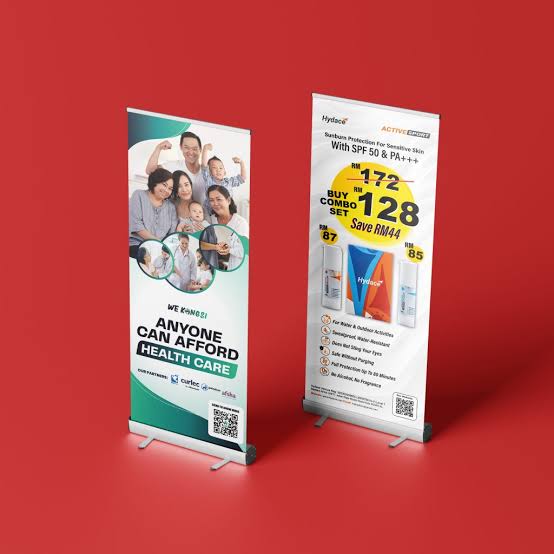
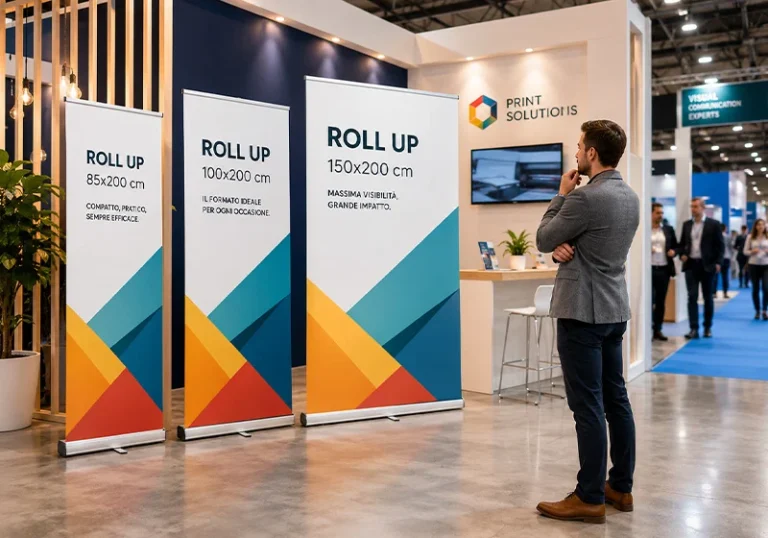
If the brochure will sit beside a portable display, coordinate it with the banner printing service so the headline, visual and response route remain consistent.
Understand the common format choices
Flat leaflet
A single sheet printed on one or both sides suits announcements, menus, price lists, inserts and focused information that does not need a folded sequence.
Half-fold brochure
One fold creates a front cover, two inside areas and a back. It can suit a concise company or product introduction with a simple reading order.
Tri-fold brochure
Several narrow panels create a compact handout. Each panel must have a clear role, and the artwork must follow the actual fold direction and panel widths supplied in the print template.
Z-fold brochure
Alternating folds allow the sheet to open like an accordion. It can support steps, schedules, maps or information that works as both separate panels and one extended view.
Multi-page brochure
When the content needs chapters, substantial imagery or several products, bound pages usually provide more readable space than repeated folds.
Match the finished size to distribution
Think about where the brochure will be displayed, carried, mailed or stored. A reception handout, conference insert, sales presentation and premium property brochure may need different sizes and materials.
Common paper series and compact leaflet formats are available in the Kenyan print market, but the exact finished and flat dimensions must be confirmed for your selected product. The print template—not the name alone—controls panel widths, folds, bleed and safe areas.
If the brochure must fit an envelope, holder, folder or event pack, measure that destination before approving the finished size.
Give every panel or page a job
Front cover
State the main value clearly enough for the intended reader to know the brochure is relevant. Use one strong image or graphic direction rather than a crowded preview of every page.
Opening panel or spread
Continue the promise and orient the reader. Explain the problem, occasion or opportunity before presenting a long service list.
Main information
Group related content under useful headings. Use photographs, diagrams or tables only when they help the reader understand or compare.
Proof and reassurance
Include only approved credentials, process details, project examples or claims that your organisation can support.
Final action
Tell the reader exactly how to enquire, visit, register, order or learn more. Check every phone number, address, email, QR code and web link.
Prepare artwork for folding and trimming
Folded panels are not always equal after one panel tucks inside another. Use the printer’s exact template and do not build the document by dividing a page into assumed equal columns.
Keep text, logos and important details inside the safe area. Background images or colours may extend through the specified bleed, while essential content should remain clear of folds and trim edges. Avoid placing a face or line of text where the paper bends.
Print and fold a simple paper mock-up before final approval. Number the panels and check which one becomes the cover, inside opening and back.
Brochure quotation checklist
- Audience and purpose
- Distribution method and quantity
- Flat, half-fold, tri-fold, Z-fold or multi-page format
- Confirmed finished and open dimensions
- Number of printed sides or pages
- Paper or board preference
- Colour and finishing requirements
- Final approved copy and images
- Design or artwork-preflight requirement
- Fold template and panel order
- Proofing and approval contact
- Delivery location and deadline
Choose paper and finishing for the way it will be handled
A brochure handed out once at an event has different requirements from a company profile used repeatedly in sales meetings. Explain how long it should remain useful, whether it will be written on, and how it will be transported or displayed.
Paper weight, surface and coating affect stiffness, colour, folding and feel. A finish that makes photographs vivid may not be ideal for handwritten notes. Heavy stock may require scoring before folding to reduce cracking, depending on the material and fold. Ask for a specification suited to the format rather than selecting paper by weight alone.
Optional finishing such as lamination, special cuts or bound covers can add protection or emphasis, but it should serve the audience and budget. Request samples where appearance and handling are central to the decision.
Control changing information
Before printing, identify details likely to change: prices, staff names, dates, offers, addresses, regulations and product availability. Move frequently updated information to a web page or QR destination when that makes the brochure more durable, while keeping a readable contact route in print.
Use a version number or approval date in the project files, even if it does not appear visibly in the design. This helps your team distinguish the current artwork from an older brochure when reordering.
For branches or departments, decide whether one general brochure and separate inserts are more practical than many almost identical versions. Every variation needs its own proof, quantity and file name.
Proof the physical object, not only the screen
Read in the intended order
Fold a mock-up and follow the route a customer will take. A correct design file can still tell the story badly if the panel sequence is confusing.
Check at actual size
Print a size-accurate proof when possible. Small text, fine lines and QR codes can appear comfortable while zoomed in but fail at finished size.
Verify every contact route
Call the telephone number, open the web address, email the stated address and scan each code. Confirm that someone owns the response process.
Review image quality and permission
Use original, licensed files and check crops on the proof. Do not pull images from search results or social media without permission.
Approve specification and quantity
Match the proof to the quotation: dimensions, fold, pages, paper, colour, finishing, quantity and delivery. Written approval should identify the exact final file.
Frequently asked questions
Which brochure fold should I choose?
Choose the fold that gives your information a natural sequence and fits the way the brochure will be distributed. Share the copy outline before settling on the format.
What is the best brochure size?
There is no universal best size. Consider content, handling, display, mailing, image impact and budget, then confirm the available specification.
Can you design the brochure for us?
Yes. Supply final copy, original images, logo files, brand guidance, quantity and deadline. The quotation can define design, revisions, proofing and printing.
Can you print artwork made in an online design tool?
Possibly, if the export matches the exact flat size, fold template, bleed and image-quality requirements. Send it for preflight before relying on it for production.
How many brochures should we print?
Estimate distribution by channel, event or period and allow only a sensible reserve. If prices, contacts or offers may change soon, a very large run can create avoidable waste.
Can a QR code be printed on a brochure?
Yes. Use a useful mobile destination, provide clear space around the code and test it from the final printed proof. Include a readable fallback contact.
Prepare a brochure people will use
Send your audience, copy, preferred format, quantity, brand assets and deadline through the Shammah Media contact page so we can confirm the production specification and prepare a tailored design-and-print quotation.